Volunteers carried the club forward
The club’s progress was built by people giving up nights, weekends and family time to create a better environment for others.

How people, purpose and better systems helped build a nationally recognised community club.

Shellharbour City Football Club’s progress has never been only about football results. It has been about volunteers, families, coaches, committee members and players working together to build a club people want to belong to.
As the club grew, better systems helped reduce confusion, centralise information, support communication and give volunteers more confidence to keep moving forward.
The club’s progress was built by people giving up nights, weekends and family time to create a better environment for others.
The club focused on inclusion, female football, volunteer engagement, governance and a stronger sense of community pride.
Better tools and processes helped the club manage more members, teams, communications and expectations without losing its local heart.
Shellharbour City Football Club’s story over the past five years is not simply a story about football. It is a story about people.
It is a story about volunteers giving up nights, weekends and family time. It is a story about coaches creating safe and positive environments for young players. It is a story about committee members trying to make good decisions while managing registrations, teams, grounds, communications, events and expectations.
And, importantly, it is a story about how the right systems can help good people do more.
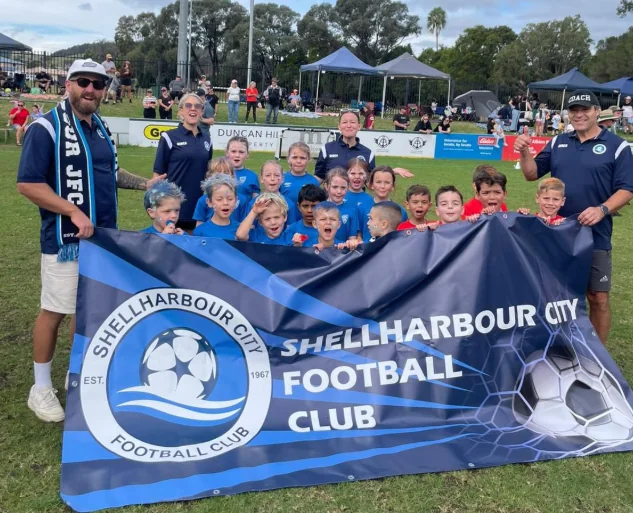
Formerly known as Shellharbour Junior Football Club, the club has grown into one of the Illawarra region’s most active and recognised grassroots football communities. In 2025, the club rebranded as Shellharbour City Football Club, reflecting a broader identity and a clearer view of what the club had become.
Like many grassroots clubs, Shellharbour’s growth brought opportunity, but it also brought complexity. More players meant more teams. More teams meant more coaches, more volunteers, more scheduling, more equipment, more questions and more pressure on the same small group of people trying to keep everything moving.
At the heart of the club’s success has always been its people. No software platform can replace the culture created by committed volunteers. But good systems can protect that culture.
They can reduce confusion, remove repetitive admin, improve communication and give volunteers back the time they need to focus on the parts of club life that matter most.
The systems helped protect it, scale it and make it easier for more people to participate in it.
This was especially important as the club continued to develop its identity as an inclusive and welcoming football environment.
One of the most significant parts of Shellharbour’s recent progression has been its work in women’s and girls’ football. Football Australia recognised the club for taking practical, targeted steps to make football safer, more accessible and more enjoyable for women and girls both on and off the pitch.
These initiatives did not happen by accident. They required planning, communication and coordination. They required people with vision, but also processes that could support that vision.
The club’s work in this space helped lead to national recognition, with Shellharbour being named Football Australia’s Club Changer Club of the Year. For a grassroots club, this was a major achievement. It recognised not just on-field results, but the deeper work being done to build a better club environment.
Shellharbour’s progress has never been only about winning games. Success has come through building a place where people want to belong. A place where players feel supported. A place where girls can see pathways. A place where coaches are encouraged. A place where families trust that the club is organised, values-driven and moving forward.
Grassroots football clubs often rely on a handful of people carrying a huge load. Over time, that model can become fragile. Volunteers burn out. Knowledge sits with individuals instead of systems. New committee members have to start from scratch.
By improving the way the club used systems, digital tools and organised processes, the club was able to support its volunteers, improve member experience and create a stronger foundation for future growth.
The lesson is not that technology solves everything. It does not. The lesson is that community clubs need tools that match the scale of what they are trying to do.
Equipped for Sport is built for clubs that want stronger systems without losing the community feel that makes grassroots sport special.
Technology should not make a club feel corporate. It should take the pressure off volunteers so the human side of the club can stand out.